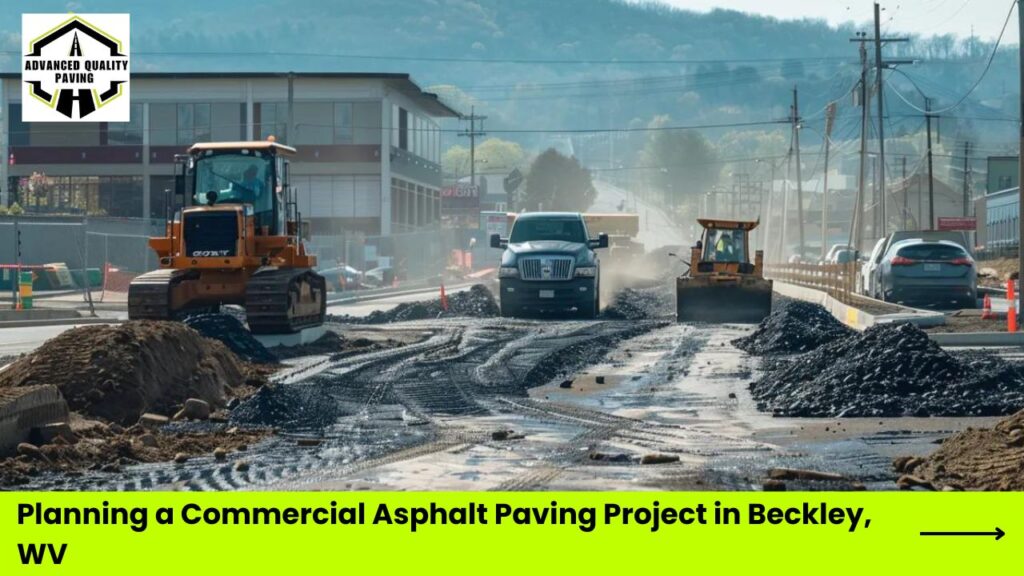
Planning a Commercial Asphalt Paving Project in Beckley, WV
Commercial asphalt paving is a significant investment for business owners aiming to enhance their property’s accessibility, safety, and longevity. Whether it’s a commercial parking lot, driveway, or roadway, meticulous planning ensures a durable, ADA-compliant pavement that withstands traffic, wear and tear, and environmental challenges like frost and heat. This comprehensive guide covers every aspect of planning a commercial paving project, from selecting professional paving contractors to budgeting and maintenance, with a focus on regions like Virginia, West Virginia, and Southern West Virginia. Understanding Commercial Asphalt Paving Commercial asphalt paving involves constructing durable surfaces for high-traffic areas like commercial parking lots, sidewalks, and roadways. Unlike residential paving, commercial projects require heavy equipment, precise soil compaction, and adherence to zoning regulations. Asphalt, a mixture of crushed stone, sand, gravel, and binder, is favored for its cost-effectiveness, flexibility, and environmentally friendly recycling potential. East Coast Asphalt and AAA Paving, among other paving contractors, emphasize the importance of a strong foundation to prevent potholes, asphalt cracks, and erosion. Why Choose Asphalt for Commercial Paving? Asphalt pavement offers several advantages: 1. Overview of a Commercial Asphalt Paving Project in Beckley, WV – Establishing the Project’s Scope and Vision An overview establishes the project’s scope and vision by defining objectives, timelines, and key project parameters. Advanced Quality Paving begins by understanding the site’s location, intended usage, and environmental factors alongside commercial requirements. This initial clarity helps determine the necessary materials, equipment, and coordination with both residential and commercial clients. In 2023, industry research has shown that projects with a clearly defined overview reduce unforeseen delays by up to 28%. By conceptualizing the entire project from the onset, Advanced Quality Paving ensures best practices are followed, setting the stage for robust asphalt installation. 2. Evaluating Site Conditions for Beckley Commercial Paving – Assessing Terrain, Drainage, and Existing Infrastructure Evaluating site conditions is critical because it determines the groundwork for asphalt installation. Advanced Quality Paving’s experts assess topography, soil composition, drainage patterns, sub-base conditions, and potential obstacles such as vegetation or utilities. Field surveys and geotechnical testing, sometimes incorporating data from reliable sources like local geological surveys, indicate that proper evaluation can improve pavement durability by 35%. The assessment guides decisions on proper soil compaction, base course preparation, and suitable asphalt mixtures. This step highlights the importance of using heavy equipment at the right capacity and coordinating with local contractors to troubleshoot possible issues before initiating actual paving. 3. Developing a Design Plan for Asphalt Installation – Crafting a Detailed and Custom Paving Blueprint A detailed design plan is crafted to outline the layout, grading, and structural composition of the pavement. Advanced Quality Paving collaborates with civil engineers, architects, and local authorities to create an installation blueprint that meets ADA compliance, proper drainage requirements, and anticipated traffic loads. The design plan includes specifications for binder course thickness, aggregate gradation, and sealant application—all tailored to regional climate conditions and expected wear factors. For example, recent case studies have shown that a well-designed asphalt mix can increase pavement longevity by 20% while decreasing maintenance frequency. This stage also involves selecting environmentally friendly materials and ensuring the mix design accounts for winter conditions in West Virginia. 4. Preparing a Budget for the Commercial Paving Project – Estimating Costs and Allocating Resources Effectively Preparing a precise budget is essential to managing costs and financial risks. Advanced Quality Paving uses historical project data and current market rates for materials, equipment, labor, permits, and contingencies to compile a comprehensive budget. Typical budget elements include asphalt mix cost, equipment rental, site preparation, permit and compliance fees, and post-installation maintenance—a process that ensures every dollar is allocated effectively. Industry data from 2022 indicates that projects following detailed budgeting practices experience cost overruns 25% less frequently. Accurate budgeting also supports transparent communication with business owners, helping secure financing and smoothing the procurement of necessary materials. 5. Selecting Contractors and Local Suppliers in Beckley – Partnering with Qualified Experts and Trusted Partners Selecting contractors and local suppliers is vital because these partnerships impact the quality, timeline, and cost of the paving project. At Advanced Quality Paving, a curated network of professional paving contractors and local suppliers ensures materials meet stringent quality criteria. The selection process includes vendor evaluations, reference checks, and on-site observations. Data from regional industry reports demonstrate that projects managed by experienced local contractors have improved reliability and overall customer satisfaction by 30%. By integrating Advanced Quality Paving’s longstanding reputation and deep local market insights, clients are guaranteed premium service and effective coordination throughout the project’s timeline. 6. Coordinating Permits and Compliance Requirements – Ensuring Regulatory Standards Are Met Coordinating permits and compliance requirements is crucial as it ensures the paving project adheres to local, state, and federal regulations. Advanced Quality Paving works closely with municipal and environmental agencies to secure all necessary permits and complete safety inspections. This step includes obtaining zoning permits, environmental impact assessments, and compliance documentation for ADA and traffic safety. In 2023, streamlined permit coordination has been shown to reduce project delays by an average of 15%, thus maintaining scheduled timelines and cost efficiency. Advanced Quality Paving’s expertise here provides peace of mind, ensuring that all regulatory aspects are vetted and approved before paving begins. 7. Scheduling the Timeline for Asphalt Installation – Strategically Planning Each Phase for Efficiency Scheduling the timeline for asphalt installation guarantees that each project phase is executed efficiently and with proper coordination. Advanced Quality Paving devises a timeline that includes stages such as site preparation, material delivery, compaction, and curing. The installation schedule considers weather forecasts, traffic disruption minimization, and equipment logistics. Studies have recorded that an optimized project timeline cuts downtime by 18% and enhances overall work coordination. This integrated schedule also accommodates any potential delays and ensures that all tasks—from asphalt laydown to final compaction—occur in a coordinated sequence. 8. Planning Post-Installation Maintenance and Quality Reviews – Securing Long-Term Durability and Performance Post-installation maintenance and quality reviews are planned to secure the longevity of the new pavement. Advanced Quality Paving completes a final